-
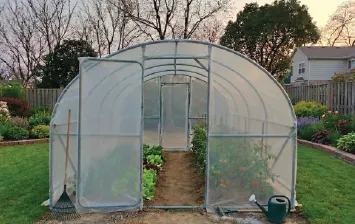 Greenhouse Kits
 -
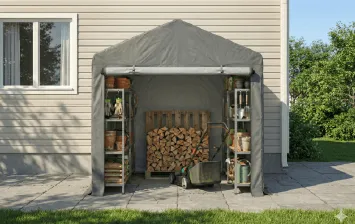 Canvas Storage Sheds
 -
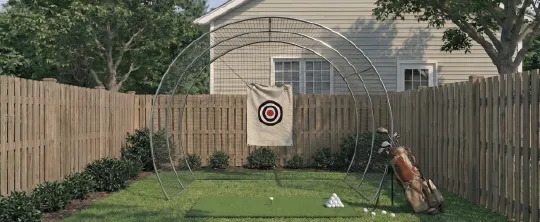 Other Fabric Structures
 -
 _
_
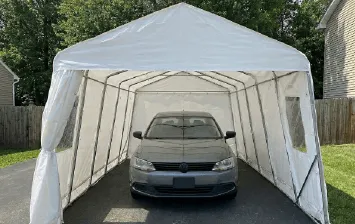
Fabric Portable Structures by DELITE
What are portable structures?
Prefabricated kit buildings designed for quick assembly and easy relocation. Also called fabric buildings, sheds, shelters and portable carports are made of a steel frame, and a fabric cover. Greenhouses kits are also made of tensile steel frame, covered with polyethylene film or polycarbonate sheets. They can be engineered to feature load-bearing properties. These alternatives to brick and mortar shelters, or metal sheds and carports are increasingly popular thanks to savings they generate and flexibility they bring.
From the backyard hobbyist to large-scale commercial operations, DELITE provides products that span applications.
Hoop Greenhouses kits :
our line of tunnel greenhouses captures every segment of the market, from hobbyist gardens to commercial farms. From 6ft small backyard hoop houses to 24ft high tunnels, our kits create safer growing conditions, extending seasons and protecting against pests and harsh weather.
Fabric Carports
our line of fabric carports caters to all kinds of vehicle owners. They range from 6ft compact motorcycle shed to extra-high and extra-large 24ft garage canopies for buses and tractors. Our hoop carport kits are all equipped with UV resistant covers, bracings and ground anchors to shelter vehicles from UV rays, acid rain, hail, and snow.
Fabric Storage Sheds
our line of portable sheds and shelters offers versatile shelter solutions. They solve space constraints for homes, farms, and worksites. Made with strong hoops and weather-proof fabric, our fabric shelter kits durably keep garden tools, supplies and equipment safe from adverse conditions all year round.
Custom OEM Portable Kits:
we manufacture custom fabric structures for partners requiring proprietary products. We adapt hoop shapes, steel frames, dimensions, fabrics, and features to create exclusive moveable structures for your brand across various applications and market demands.
KIT BUILDING MANUFACTURING POWER
What began as a humble workshop has evolved into a powerhouse of fabric building innovation. Today, we leverage three dedicated, product-centric manufacturing lines to ensure precision and scale for our global partners.
Proven Experience:
over a decade of expertise in crafting and exporting premium hoop building kits.
Sound Manufacturing Means:
fabric buildings are manufactured on 3 different semi-automated production lines.
Monthly Capacity:
Our facilities produce 3,200 portable greenhouses and 1,300 tensioned fabric structures every month.
Precision Engineering:
Every standard clear-span structure undergoes no less than 12 manufacturing steps, combining automated equipment with the skill of operators boasting over 10 years of experience.
HOOP BUILDINGS QUALITY PLEDGE
We follow in the footsteps of the world's leading portable structure manufacturers by prioritizing engineering that lasts. Our kit buildings are designed to withstand the test of time and the unpredictability of climate change.
Safety First
We commit to strict quality standard to ensure safer shelters for equipment and people using our fabric structures.
Rust Protection
Structural steel components feature hot-dipped galvanization coat to preserve integrity for decades.
Rapid Setup
Components are pre-fabricated, labeled, and 100% of the energy onsite is dedicated to hassle-free assembly without special tools.
Quality & Value
We balance high-performance materials with smart economics to give our clients a competitive edge.
FABRIC BUILDINGS MADE FOR U.S IMPORTERS & RETAILERS
Retail Solutions: Maximize Margin & Minimize Support
Our kits feature retail-ready packaging with optimized shipping dimensions to reduce logistics costs. They appeal to DIY homeowners and gardening enthusiasts, offering strong margins and repeat business potential through accessories and replacement parts.
Wholesale Distribution: Consistent Supply for Large-Scale Demand
Our manufacturing equipment and process are designed for volume production and large-scale distribution. Our products applications span agricultural, industrial, and commercial end-users with consistent specifications that meet industry standards and application requirements.
10 Years of Manufacture Experience
We combine our expertise with high quality materials and automatic manufacturing processes to create safe, durable, efficient, and aesthetically pleasing fabric structures.
More about portable manufacturingRequest a Quote
Ready to work together? Tell us your specific requirements!
Frequently Asked Questions
1. Do you provide OEM customized services?
Yes, we do! Customized service is one of our core strengths. We have an experienced professional design team that can quickly provide reasonable suggestions and design solutions according to the specific needs of our clients.
2. What's the usual lead time for the order?
The lead time depends on the order quantity and complexity of the project. Generally, it takes about 20-45 days after receiving the deposit. We will keep you updated on the production progress throughout the entire process.
3. What kind of payment terms?
We accept T/T (Telegraphic Transfer), L/C at sight, and other mutually agreed payment terms. Usually, 30% deposit in advance and 70% balance before shipment.
4. What kind of transportation methods?
We can arrange sea transportation, air transportation, and land transportation according to your requirements and the actual situation. We have long-term cooperative freight forwarders to ensure the safety and timeliness of delivery.
Basic knowledge
Our definition of Portable Structures
They are relocatable fabric buildings. They are made of single truss steel frames that prove versatile, and cost-effective because they are easily assembled, and can be moved when needed. These structures include: hoop houses that maximize light transmission for optimal growing conditions; and tensioned fabric buildings that offer large, clear-span spaces for storage, workshops, or commerce. The key advantages include rapid deployment, lower initial investment, and exceptional adaptability to changing needs. When choosing portable structures businesses should consider steel gauge, coating type, fabric UV treatment, and engineering for local snow/wind loads. Because they will determine how well, and how long the hoop buildings will perform against regional climate conditions and intended use.
Hisoty of Portable Structures
Temporary structures have been used for decades whenever people needed fast, flexible shelter without the cost or delay of permanent construction. Early versions were simple temporary frames covered with basic membranes for events, construction sites, and seasonal storage. Over time, demand from agriculture, logistics, and industrial buyers pushed the market toward stronger steel frames, improved corrosion protection, and fabrics built to resist UV exposure and tearing. Modern transportable structures are now engineered as complete kits: components are pre-drilled, labeled, and shipped efficiently so teams can install them quickly on a prepared site. This evolution turned “temporary shelters” into reliable, repeatable building kits that businesses can deploy, relocate, and scale as operations change.
Moveable Structures VS Fabric Buildings
What is the difference between a Portable Structure, and a Fabric Building?
The terms “portable structures” and “fabric buildings” often overlap, and many buyers use them interchangeably. But when it comes to words, we, at DELITE, prefer to be precise. This is why we dedicate this short, yet important, section to laying out the core differences between these 2 kit building types.
Portable Structures key aspects
Portable structures are simply portable buildings which skeleton is made of parts and material sections that are connected together. When limited to the construction industry definition, a structure does not include roof and walls covering. It focuses on the framework. When referring to a more general definition, a structure is oftentimes assimilated to a "building", thus including covering.
Fabric Buildings key aspects
Fabric buildings key aspects are somehow more difficult to list. Apart from insisting on "fabric" covering, the term building is very general. In practice, fabric buildings are made of steel structures, both single truss, and double truss. They are almost always covered with tensioned fabric, that does not let the light in, or is at least not transparent.
The core differences
Upon laying out the characteristics of both types, we conclude that core differences between portables and fabric buildings is their size, type of cover, and structure's framework.
- Structures that can be moved start very small but max out when width reaches 24ft.
- Fabric Buildings are almost always covered with tensioned fabric. While structures can be covered with a large array of weatherproof covers such as tensioned fabric, agricultural film, or even polycarbonate sheets.
- Port able structures are single truss only. But fabric buildings are most often double truss frameworks.
-

-
- Founded in 2016 by 2 inspired friends from vastly different fields, DELITE was born from a common goal: to create popular kit buildings that protects what matters. From a humble workshop, we now leverage 3 product-centric manufacturing lines. Our vision as a portable structures manufacturer is to make resilient shelters affordable and easy to assemble as a response to a shifting environment.
- PRODUCTS
- About DELITE
- More
- Contact
-
-
Phone: 0086 186 2191 2330
Email: info@portable-structures.com
Address: Building 1, 326# Songdong Road, Songjiang Industrial Park, Songjiang District, Shanghai
-
Phone: 0086 186 2191 2330


